Back in stock
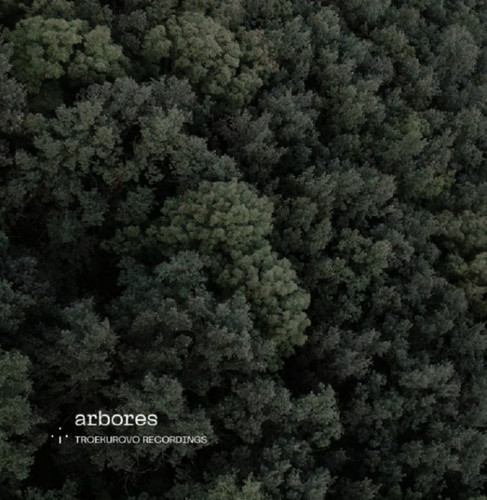
Arbores
Tip! Troekurovo Recordings is a production team made up of Toki Fuko, Vadim Basov and Evgeny Vorontsov and they have been hidden away deep in some enchanted Russian forests recording music. Now they are putting out the results on this superb double pack. This project started back in 2016 as a live experimental jam and is now an annual tradition made on loads of analogue gear on the banks of a canyon that was formed many years ago by a melting glacier. The locale provides inspiration - from the f…
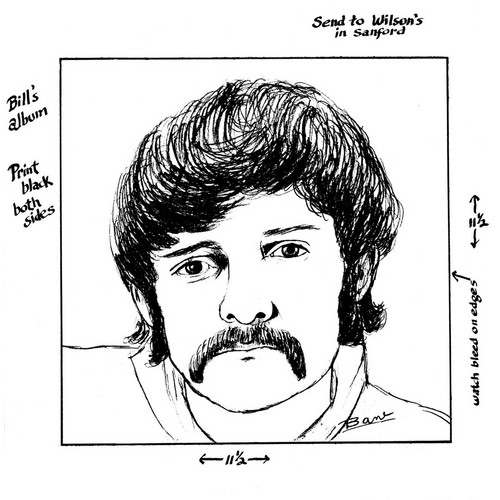
Stone
Tip! *2022 stock.* Maine’s finest lonesome folkie back in the days of Woodstock was Bill Stone, who released one album on his own back in 1969. This classic ballad structure sounds like the voice of Tom Rapp and the quiet desolation of Leonard Cohen with more elevated psych guitar moves oscillating in and out of the mix.
"The psychedelically inclined folksinger Bill Stone recorded his lone album, “Stone,” in 1969, singing through a walrus mustache inside a Maine pottery studio. It may seem as if…
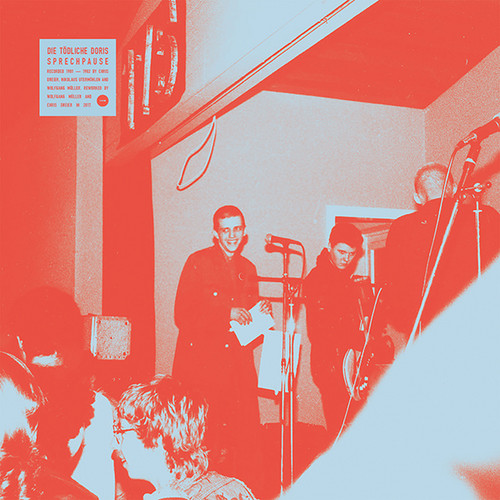
Sprechpause
**In stock this week** “In der Pause” (During the Pause) was the title of the last track on the b-side of “ “, the first album by Die Tödliche Doris. “In der Pause” was pause music, as well as the announcement of the interval between their debut album, released in 1982, and the box format project ”Chöre und Soli” that followed in 1983. The original sounds of “In der Pause” survived on a single audio tape dating from 1981. Now, about 35 years later, Chris Dreier and Wolfgang Müller have used the …
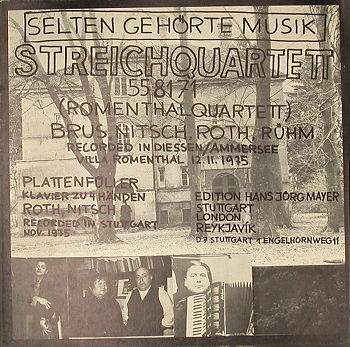
Streichquartett 558171 (Romenthalquartett)
Fourth part in the Selten Gehörte Musik reissue series. Two CD’s packaged in illustrated 12“ LP gatefold-sleeve. Edition of 500 copies. "The next 'Rarely heard music' production was staged once again in a private setting: at Hermann Nitsch’s Villa Romenthal by Lake Ammer on 12th February 1975:with Günter BRUS, Hermann NITSCH, Dieter ROTH and Gerhard RÜHM, which filled all of a three album boxed set. Although originally we had simply made a selection of the recorded material large enough to…
Das Munchner Konzert 1974
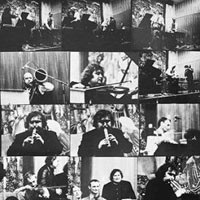
Third part in the reissue series of all Selten Gehörte Musik records. This is the Münchner Konzert 1974 performed by all-star artist line-up of Dieter Roth, Gerhard Rühm, Oswald Wiener, Hermann Nitsch and Günter Brus. Originally published as a 3LP-Box by Hansjörg Mayer in 1975. Now reissued as a double-CD set, packaged in illustrated LP-Gatefold sleeve (reproduction of the original artwork), with printed innersleeve and a reprint of the original fullcolour concert-poster by Günter Brus. Edi…
In Europe
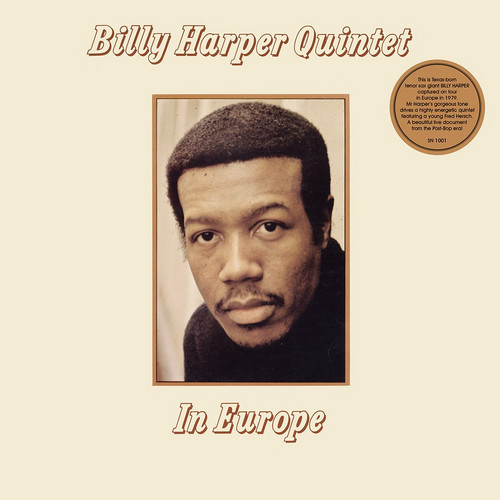
"In Europe gives a fine glimpse at the power and intensity of Harper's compositions and his tremendous abilities as an improviser... Highly recommended music for post-bop and free jazz appreciators." - Allmusic
Don't Eat Food!
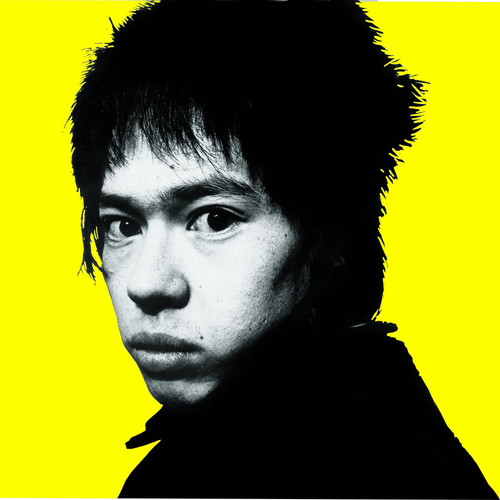
A high-octane tour-de-force widely considered in Japan to be one of the all-time greatest punk records, 1981's Don’t Eat Food! remains shockingly unknown to the rest of the world. Led by literate but unhinged Machida Machizo, a magnetic stage presence who sang in a thick Osaka dialect that sounded like nothing else at the time, INU came from the same scene as Aunt Sally and took Japan by storm in the late '70s with their powerful live show. Their membership changed frequently but INU's final lin…
Wave Field
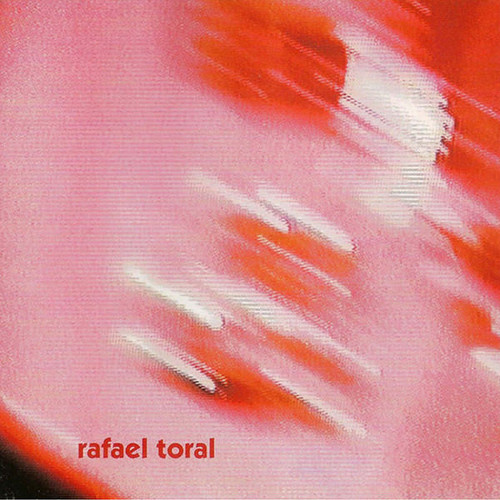
**A prescient vision of the next phases of listening space! Remastered reissue, first on vinyl** Released in 1995 ‘Wave Field’ was a departure from the first album into new composition methods involving the dirty textures of rock guitar, sounding in the open ears of many listeners (like Jim O’Rourke, who issued the disc in the US on dexter’s cigar) as a synthesis of disparate elements - a nexus where Alvin Lucier, Sonic Youth, My Bloody Valentine and Brian Eno blend together. Here, the clangorou…
Sold Out

For The Whole World To See
Classic proto-punk from 1970s Detroit. Raw with little polish, the record showcases the organic power relationships within the trio of brothers. The Hackneys were first influenced by soul & funk music but it all changed when they saw Iggy and the Stooges. Inspired by The Who, Alice Cooper & Led Zeppelin; the brothers finally see their first full length release, remastered & ready for the world to hear.
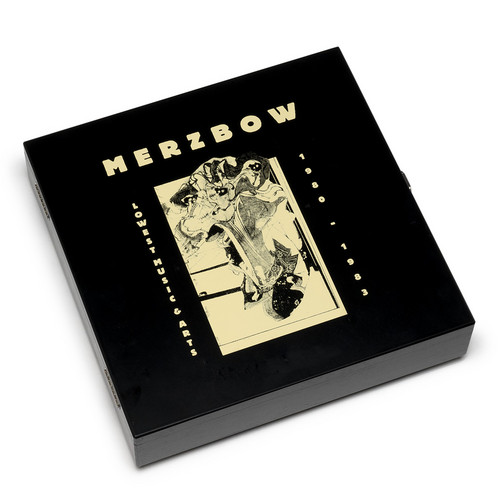
Lowest Music & Arts 1980-83
This 10Lp-Set in a black varnished and silkscreened wooden Box is a comprehensive Anthology of the „Godfather of Noise“ early works, carefully selected and mastered by Merzbow himself. Is there anything left to say about Mastermind Masami Akita alias Merzbow that hasn’t been told or known. Does he still need any introduction or explanations? Merzbow has been actively recording 'Noise-Music' since late 1979. You can not talk about the Genre „Noise“ without eventually leading to him as one of th…
Sold Out
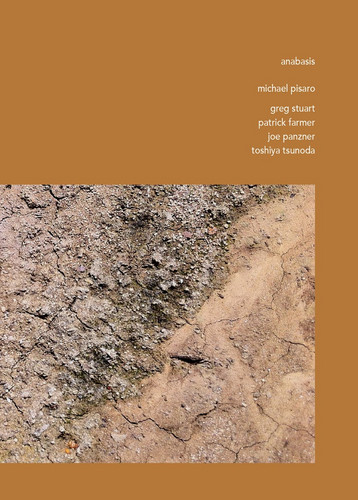
Anabasis
Anabasis is a composition in 72 parts for five musicians, loosely based on four kinds of materials: Sand, Wind, Tone and Wave. The musicians featured on this recording (in addition to Michael Pisaro and Stuart) will be Patrick Farmer, Joe Panzner and Toshiya Tsunoda. (GW 013)
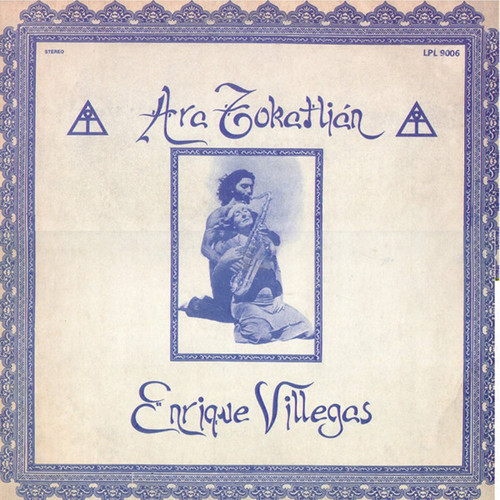
Inspiración
This top-notch spiritual jazz album from Argentina will leave fans of Pharoah Sanders and John Coltrane astonished. Recorded in 1975 and still surprisingly off the radar, this is one of the deepest jazz albums from South America. Inspiración is the meeting of two generations united by music: Ara Tokatlian and Guillermo Bordarampé, members of the influential 70s rock band Arco Iris (which Tokatlian cofounded with the now Oscar award-winning composer Gustavo Santaolalla), join forces with Enrique …
Sold Out

Domesticated Wind
Edition of 500 copies, incl. 12pp booklet. These recordings are the outcome of sound experiments performed at the wind tunnel laboratory at Zurich University of the Arts. Accompanied by photographs and a video project by Yan Junjie.Kaspar König (born 1975 in Maastricht, lives and works in Zurich) is the director of the wind tunnel facility from the Research Focus in Transdisciplinarities at the Zurich University of the Arts.
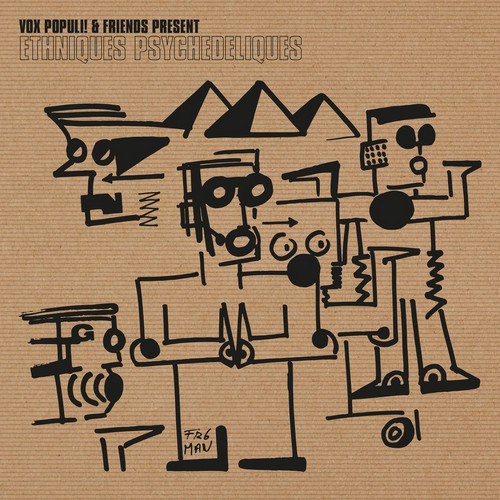
Ethniques Psychedeliques
Platform 23 returns to where it began, working the Vox Man Records to bring their compelling and unique archive to light, going beyond the hugely successful Alternative Funk compilations that launched the label, to again create a compilation from their cult cassette releases, in this instance Audiologie N°4 - The Independant Psychedelic Trip and Audiologie 5 et 6 - Ethniques Urbaines. Run by Axel Kyrou (Vox Populi!) and Francis Man (FR6 Man / Kosa), their label, releasing cassettes, 7” and LPs b…
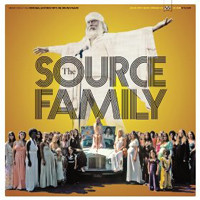
The Source Family
LP version. "For the soundtrack to The Source Family documentary, a selection of material was chosen to include the widest variety of Source Family members, showcasing the talents of many not previously showcased. And so, in addition to Ya Ho Wa 13 members Djin, Sunflower and Octavius, we also hear the contributions of Cinderella, Ahom, Aquariana, Anastasia, Rhythm, Horn, Electron, Zoroaster, Vibration, Pythias, Damian, and Zinaru -- as well as the omnipotent Yahowa himself, Father Yod. Their mu…
Sold Out

Rebajas
The ‘Rebajas’ box set is a 7CD, 6 hour and 42 minute journey through the Bitchin Bajas catalogue to date, including all 11 of their solo releases: eight albums and the Bajas sides of three split records. The music on the ‘Rebajas’ box represents the dawn and early period of Bitchin Bajas. In the time of their conception, none of these releases were issued on anything other than vinyl. Maybe a cassette too, for some of them.
"It made sense: analogue synth music recorded on analogue tape - why wan…
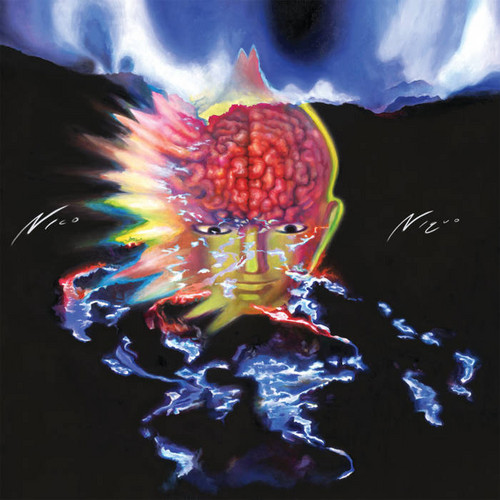
Esperanto
Nico Niquo’s ‘Esperanto’ sees the Australian artist return to Orange Milk Records six years since his album ‘In A Silent Way’, and on this new release, Nico builds upon the framework of his last two records for the label: still, ghostly Grime, retro-futurist synthesizer arpeggios, and flourishes of New Age ambiance.

Bajas Fresh
Over seven tracks that span 80 minutes, the expansive, looping, shifting synths and rhythms of Bajas Fresh mark the trio’s most diverse and ambitious record.
Sold Out
Bajascillators
With a tactile clunk, Bitchin Bajas (Cooper Crain, Rob Frye and Dan Quinlivan) bubble to the surface. Bajascillators, arriving almost five years since their last official full-length, 2017’s Bajas Fresh, is a riveting new full-length springing forth from the implacable, eternal gene pool that's also included soundtracks, re-imagined cuts from Sun Ra's catalog, and collaborations with Natural Information Society and Bonnie 'Prince' Billy among their illustrious recorded output. Following the flow…
Sold Out
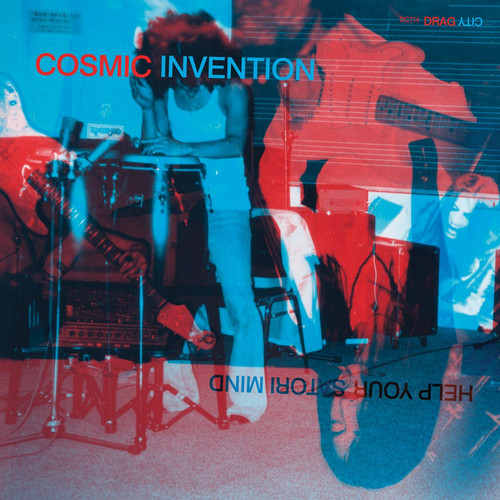
Help Your Satori Mind
Side project from the golden era of Masaki Batoh's Ghost! Instead of the spirituality-infused temple-raiding of the mother band, Cosmic Invention sought to play - loud and hard - in the spirit of their youthful inspirations. Enter Michio Kurihara, with his otherworldly Cippolina-channeling leads - and a storming rock band, whose subsequent incarnation as Ghost shocked the US in '97. Bonus jam included on this first-ever vinyl manifestation. On Help Your Satori Mind, the results are as spectacula…