Back in stock

Polarity 3
The third volume of duos between indefatigable tenorsaxophonist Ivo Perelman and adventurous trumpeter NateWooley is their most intimate encounter to date. Beginningwith mournful, almost undersea drones, it moves through avariety of subtly shifting moods, combining old-school jazzromanticism with the kind of nearly telepathic interaction thatonly a long-term creative relationship can inspire. Anyonewho’s enjoyed the first two volumes of this brilliant series willfind this latest dispatch to be a…

In Slaughter Natives
Undoubtedly one of the most anticipated events in industrial music. For the first time on vinyl! Infinite Fog Presents the Reissue Series of the Legendary Project In Slaughter Natives Cult!
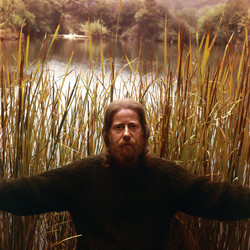
Wild Boy: The Lost Songs Of Eden Ahbez (uncut studio versions)
The new release of Wild Boy intends to keep the atmosphere of studio cuts as authentic as possible. The album has a few minutes more of Eden Ahbez in the studio than the previous release had. Minutes full of emotion and life...
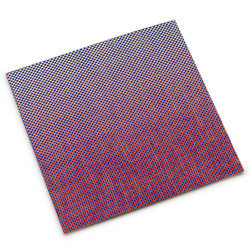
Slo-Mo Neon Luminate Hoverings
Trumpeter/composer Ambrose Akinmusire and guitarist/composer Mary Halvorson's album Slo-Mo Neon Luminate Hoverings is due June 12, 2026, on Nonesuch Records. The album features four new compositions by each musician as well as one collaboration. The album track “Soundcheck“ is available today and can be heard below; you can pre-order the album here. The duo, long admirers of each other’s musicianship, met at Halvorson’s Brooklyn apartment and began playing together periodically, going back as fa…
Sold Out
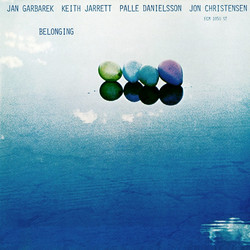
Belonging
Tip! "Belonging is a studio album by American jazz pianist Keith Jarrett, recorded over two days in April 1974 and released on ECM later that year—the debut of Jarrett's "European Quartet", featuring saxophonist Jan Garbarek and rhythm section Palle Danielsson and Jon Christensen. Because Jarrett's contract with ABC/Impulse! prevented him from performing with the quartet under his own name, the group became known as the 'Belonging' quartet." - Wikipedia

Confusional Quartet
Futurism with its dynamic force, youthful spirit, attention to innovation and a bit of Italian histrionism; the sixties with their hopeful and playful atmosphere and their crisp and catchy music; Italy with its beautiful sun, beaches, Mediterranean brightness and laxity; minimalism with its focus on the deepness of details; all the things happening in Bologna in the late seventies, among some of the newest and most creative experiences in film, performance, fashion and music. With these elements…
Sold Out

Agneta Nilsson (Heldon IV)
On Agneta Nilsson, Heldon sharpen their hybrid of radical prog and early electronics into long, slow-burning forms, where rigorously shaped tension keeps colliding with sudden voltage spikes of guitar and synth.
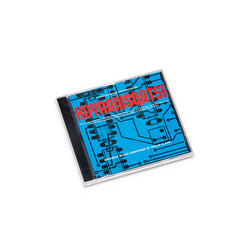
Koyaanisqatsi
Koyaanisqatsi is the soundtrack album to Godfrey Reggio’s 1982 experimental film. Composed by Philip Glass, the music accompanies a montage of stark, contemplative imagery without narration, aligning minimalist motifs with evolving cinematic sequences. The CD presents a suite of instrumental pieces that mirror the film’s themes of balance, urbanization, and nature, making it a standalone minimalist work as well as a companion to the visuals.
My Life In The Bush Of Ghosts
Stranded gave Roxy Music their first UK No’1 album and brought with it an undeniable presence that would eventually see Roxy Music’s American audience take note! It was becoming all too clear that Roxy Music were indeed a band ahead of their time.
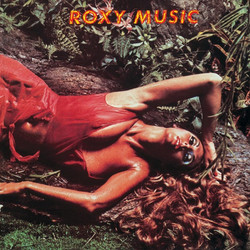
Stranded
Stranded gave Roxy Music their first UK No’1 album and brought with it an undeniable presence that would eventually see Roxy Music’s American audience take note! It was becoming all too clear that Roxy Music were indeed a band ahead of their time.
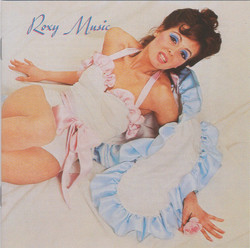
Roxy Music
Falling halfway between musical primitivism and art rock ambition, Roxy Music's eponymous debut remains a startling redefinition of rock's boundaries. Simultaneously embracing kitschy glamour and avant-pop, Roxy Music shimmers with seductive style and pulsates with disturbing synthetic textures. Although no musician demonstrates much technical skill at this point, they are driven by boundless imagination -- Brian Eno's synthesized "treatments" exploit electronic instruments as electronics, inste…
Sold Out
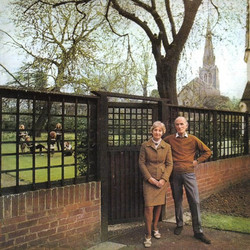
Unhalfbricking
Unhalfbricking is the third album by the British folk rock band Fairport Convention and their second album released in 1969. It is seen as a transitional album in their history and marked a further musical move away from American influences towards more traditional English folk songs that had begun on their previous album, What We Did on Our Holidays and reached its peak on the follow-up, Liege & Lief, released later the same year.
The album features several Bob Dylan songs, which he had not yet…
Sold Out
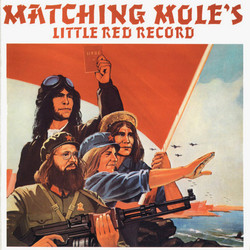
Little Red Record
2CD Expnaded Edition. This Esoteric Recordings edition has been newly remastered from the original master tapes and is expanded to include four previously unreleased studio session alternate takes and Matching Mole’s appearance on BBC Radio One “In Concert” in July 1972. The booklet restores all original artwork and includes an essay by Sid Smith. Matching Mole's Little Red Record (1972) is the second album of the British Canterbury Scene band Matching Mole. Compared to their first album, Little…
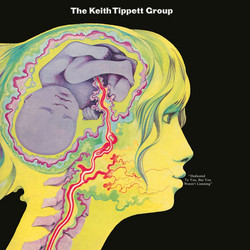
Dedicated to You ...
Famed Jazz pianist Keith Tippett is one of the greatest and most innovative figures in modern jazz. His work has also seen him cross into the world of Progressive Rock, working with King Crimson and his own outfit Centipede.
‘Dedicated to You, But You Weren’t Listening’ took its name from the Soft Machine track of the same name and was the group’s second album. Recorded for the legendary Vertigo label, the album featured such celebrated alumni as Elton Dean on Alto Saxophone, Marc Charig on Corn…
Sold Out

The Story Of Moondog
Dating back to 1957, The Story Of Moondog followed up the previous year's More Moondog LP, setting its course for adventurous new sounds and homemade percussion meditations.The music is never a slave to any one fixed agenda and much of the material here sounds as if its gathered from some undiscovered culture - it's all-but impossible to compare this with anything else from the era, but when the longer-form pieces arrive they augment the more primal, outsider aesthetics with visceral, jazzy arra…
Sold Out
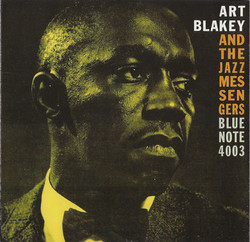
Moanin'
Moanin’ is the sound of Art Blakey turning a band into a congregation, with Lee Morgan’s trumpet, Benny Golson’s tenor saxophone, Bobby Timmons’s piano, and Jymie Merritt’s bass all testifying over Blakey’s unmistakable cymbal crashes and press rolls. From the call‑and‑response of the title track to the burning hard‑bop vehicles that follow, the record distils church‑infused, blues‑drenched celebration into a small‑group format. Each soloist brings a distinct voice – Morgan’s bright fire, Golson…
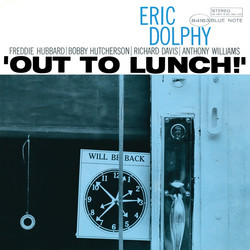
Out To Lunch!
Out to Lunch! remains one of the most strikingly original statements on Blue Note. Eric Dolphy marshals Freddie Hubbard on trumpet, Bobby Hutcherson on vibraphone, Richard Davis on bass, and Tony Williams on drums into a unit that treats his knotty compositions as springboards rather than straitjackets. Themes like “Hat and Beard” arrive full of angular intervals and odd accents, while the rhythm team tilts and lurches under them, propelled by Williams’ restless cymbal work and Davis’ flexible g…
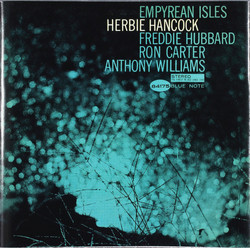
Empyrean Isles
Herbie Hancock debuted on Blue Note in 1962 and quickly established himself as both a remarkable pianist and a brilliant composer with three excellent albums—Takin’ Off, My Point Of View, and Inventions & Dimensions—before making what is widely considered to be his first masterpiece: Empyrean Isles. Recorded in 1964, the album seemed to distill the full breadth of Hancock’s artistry into a sweeping 35-minute musical journey. Joining Hancock on the voyage were three of his closest collaborators: …
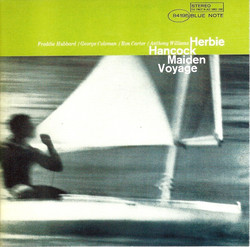
Maiden Voyage
On Maiden Voyage, Herbie Hancock turns the small jazz group into an ocean vessel, steering a dream team of Freddie Hubbard (trumpet), George Coleman (tenor sax), Ron Carter (bass), and Tony Williams (drums) through a suite of sea‑evoking pieces. Modal harmonies, open forms, and long, swelling melodies create a sense of expanse; Carter and Williams suggest tides and undertows, while Hubbard and Coleman trace arcs that feel both exploratory and inevitable. Hancock’s piano balances delicacy with fo…

Flowers of Evil, Short Circuits, 7 Trumps from the Tarot & Pinions (3CD Bundle)
3CD Bundle. Official editions, remastered CD reissues of the Ruth White’s seminal albums Short Circuits, 7 Trumps from the Tarot & Pinions, and Flowers of Evil. White’s world would grow bolder in 1964, when she built her very own studio. In the current age of the affordability of technology, the likelihood of building your own recording space borders on something for the everyman/woman/they/them. Needless to say, that was resolutely not the case in the early 60s’, especially for a female artist…

Säkeitä Esoteerisesta Euroopasta
On their third album, Finnish Dieux Des Cimetières continue to explore the territory of the martial post-industrial underground. Achingly melancholic melodies, sweeping strings, atmospheric orchestrations, martial percussion and pulsating synths combine to create an intricate album of esoteric neoclassical and martial industrial. Influenced by authors such as Giuliano Kremmerz, Oswald Spengler, H.P. Blavatsky and Mircea Eliade, Säkeitä esoteerisesta Euroopasta (Verses on Esoteric Europa) looks a…

Ossido Di Cromo (Anamnesi Mediatica Ricostruttiva)
You can’t speak of industrial music without mentioning the cassette tape. The tape was an essential format in the formative years of the experimental, industrial underground, and has remained a significant factor within the post-industrial scenes ever since. Where right now the cassette tape is going through some kind of fetishized hipster-revival in other scenes, in industrial, experimental and noise music it never died. The tape was a revolutionary format for Paolo Bandera as well, who capture…

Eco Solemnis
More than 30 years since their first release, French Regard Extrême are back with a new album, their third on Steinklang. Stylistically, Eco Solemnis builds upon the foundation established on previous albums: medieval music and orchestral neoclassical with elements of martial industrial. In comparison to the previous album of new music, 2021's Ars Veterum, Eco Solemnis incorporates more prominently the neoclassical elements of earlier Regard Extrême, but without abandoning the medieval, even mon…
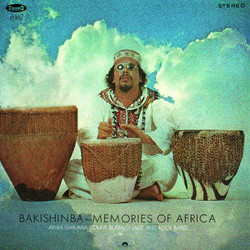
Bakishinba: Memories Of Africa
“An ambitious, brand new album has reached the Japanese jazz scene. It is ‘Bakimba – Memories of Africa.’” This is how Akira Ishikawa Count Buffalo Jazz And Rock Band’s album was advertised by the Japanese press in 1970.
The Japanese jazz artists were bravely approaching the rock scene, and their choice became an inspiration to jazz-rock groups like Takeshi Inomata & Sound Limited, Jiro Inagaki and Soul Media, and more. The blending between jazz and rock was born in the United States, thanks to …
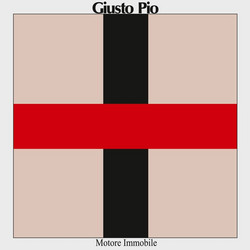
Motore Immobile
To quote Pitchfork, this is 'one of the most sumptuous, spiritual ambient albums of any era or provenance.

Keep On Truckin'
One of the prized private press rarities of early 1970s American rock. Originally issued in 1972 on the tiny East Coast Records imprint, Keep On Truckin' is the lone album by Surprize, a Philadelphia five-piece whose single recorded statement - heavy, bluesy, psychedelic, and threaded with organ - has spent decades near the top of collectors' want lists, original copies nearly impossible to find and counterfeited more than once along the way.
The band had been together only eight months when, in…

Part One
Released in 1967 on Reprise Records, Part One is the second album by The West Coast Pop Art Experimental Band and is widely regarded as their strongest and most cohesive work. Blending psychedelic pop, experimental rock, and surreal songwriting, the album features compositions by Frank Zappa, P.F. Sloan, Baker Knight, and Van Dyke Parks. More song-oriented than their debut yet still wildly unpredictable, Part One captures the strange, fractured beauty of Los Angeles psychedelia at its peak.
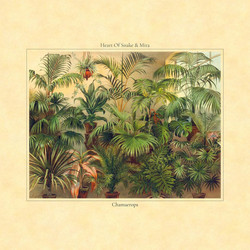
Chamaerops
Shrouded in mystery just like their magical compositions Torino’s collective Heart Of Snake are joined by Mira for their first release in six years, the enchanted ragged vibration of ‘Chamareops’, a 40 minute opus that just like the cold-hardy palm that lends its name to the album, blends classical guitar, desert folk, meditative exotica and distant island lullabies that withstand the test of time.
Originally led by Vincenzo Marando (Movie Star Junkies, Krano, Similou), Alberto Danzi (I Residen…

Heroin
Recorded by Stephan Mathieu and Ekkehard Ehlers over the single week between Christmas 2000 and New Year 2001, and originally issued that same year on the Dutch imprint Brombron, Heroin remains one of the great curiosities of early-laptop electronic music: a record that arrived bearing an ambivalent, faintly transgressive title and contained almost the opposite of what that title implied.
The album sits at a precise moment in both composers' arcs. Mathieu, originally a drummer and a co-founder o…

Sonic rivers
Tzadik introduces its new Spectrum series with a very special and exciting new group featuring three of the most creative wind players in new music. Friends and colleagues since the ’70s, these three musicians share a vision of improvisation and composition that is unique, virtuosic and cooperative. Performing compositions and collective improvisations, they sculpt sound and silence with masterly assurance. Surprising yet completely inevitable, this is an essential document of improvisational mu…
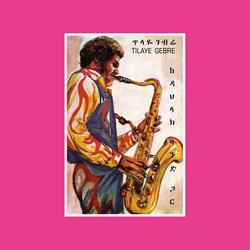
Tilaye's Saxophone With The Dahlak Band
Tilaye Gebre was a central figure in Ethiopian music during the mid- to late 1970s, a period now hard to document but rich with talent. His saxophone and arrangements are likely featured on many recordings from Addis Ababa of that era. Despite Ethiopia’s limited formal musical institutions, Tilaye trained at the Haile Selassie First Theatre music school, where he began studying saxophone instead of guitar under mentor Ato Aymre Gemeda. This instrument became his lifelong expressive voice.
Tilaye…

Essen 1970
A document of one of British folk-rock's great might-have-beens, captured just weeks before it ended. Recorded live at the Grugahalle in Essen on 23 October 1970, during the third Essen Pop & Blues Festival, Essen 1970 finds Fotheringay - the short-lived band Sandy Denny formed on leaving Fairport Convention - at the height of its powers, playing with the confidence of a group that believed it had years ahead of it. Within three months, it would be gone.
Fotheringay took its name from Denny's ow…
Psycotron - 1
** Limited edition of 150 hand-numbered copies in printed box with silkscreened covers and printed insert. ** A hazy, claustrophobic bridge between minimalism, drone, creative conceptualism, ambient music, and noise, we’re thrilled to offer the first ever vinyl reissue of Nord’s “Psycotron - 1” - one of the greatest and most sought-after holy grails of early Japanese Noise. Recorded by Hiroshi Oikawa only a handful of years before his complete disappearance and originally issued in 1984 as a ca…

Saving One Who Was Dead / Little Crusader
Music for movies by Václav Kadrnka "Absence of the loved one is a theme running through both films, but during the creative process we never discuss with the Havels the themes, symptoms or attributes of the characters. We do not specify any meanings. Our collaboration is intuitive, based on interconnectedness. We neither explain things to each other nor analyse. From the outset we have a common goal: to quieten the viewers’ perception, to attune them to certain vibrations by visual, musical and…

Concert A Prades Le Lez Vol.2
On Concert A Prades Le Lez, Intercommunal Free Dance Music Orchestra turns Tusques’ radical internationalism into exuberant sound: a border‑smashing live suite where New Orleans, Brittany and North Africa collide in dance‑charged, militant joy.

Concert A Prades Le Lez Vol.1
On Concert A Prades Le Lez, Intercommunal Free Dance Music Orchestra turns Tusques’ radical internationalism into exuberant sound: a border‑smashing live suite where New Orleans, Brittany and North Africa collide in dance‑charged, militant joy.

Concert A Prades Le Lez Vol 1 & 2
On Concert A Prades Le Lez, Intercommunal Free Dance Music Orchestra turns Tusques’ radical internationalism into exuberant sound: a border‑smashing live suite where New Orleans, Brittany and North Africa collide in dance‑charged, militant joy.

Vol. 4 Jo Maka
Rerelease of the fourth album of the Intercommunal Free Dance Music Orchestra recorded with the Guinean saxophonist Jo Maka. The title says it all: Vol.4 – Jo Maka. The Intercommunal Free Dance Music Orchestra was created in 1971 by an “old hand” of French free jazz, François Tusques. Free Jazz, was also the name of the recording made by the pianist and other like-minded Frenchmen (Michel Portal, François Jeanneau, Bernard Vitet, Beb Guérin and Charles Saudrais) in 1965. But, six years later Tus…
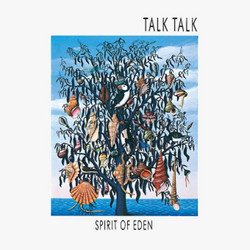
Spirit of Eden
On Spirit Of Eden, Talk Talk dissolve the idea of a “band” into a hushed, slow‑burning soundscape, six long pieces where jazz, blues, chamber music, and near‑silence fuse into something that feels less like an album and more like a single, ritual act of listening.