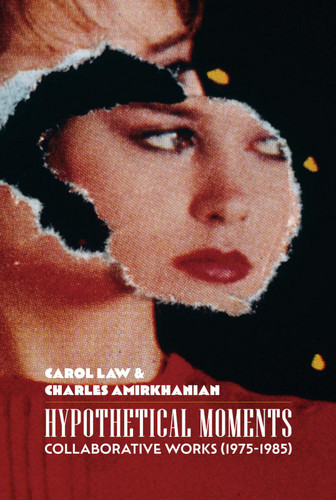
Hypothetical Moments
Other Minds is excited to present Hypothetical Moments, a DVD of the collaborative works of Carol Law and Charles Amirkhanian, available on video for the first time. Some of the work included within will be familiar to followers of Amirkhanian’s work (Dog of Stravinsky, Mahogany Ballpark), but the vast majority of Hypothetical Moments has been entirely unavailable until now. Both video and audio have been lovingly restored and remastered, opening up a new pathway into the densely layered and ref…
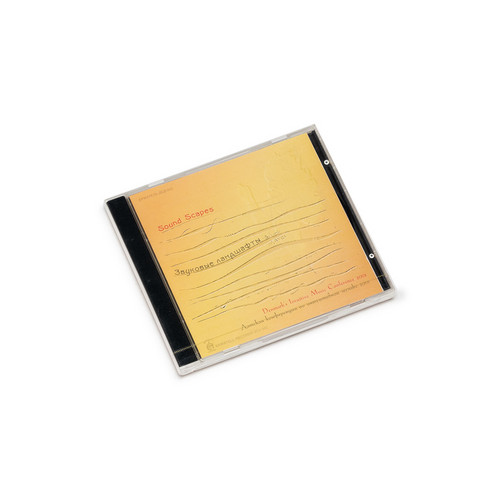
Sound Scapes - Denmark's Intuitive Music Conference 2001
*In process of stocking. 2022 stock* "...the music you can listen here on this CD is result of collaboration of musicians from five countries gathered for participating in DIMC held in Rudme in summer 2001. Some compositions are examples of collective improvisation notated graphically, by different ways. Thus, graphical score can look like a sort of "verbal instruction" for performers, with a prescription how selected musical models interact. It is this way by which pieces by Henrik Rasmussen an…
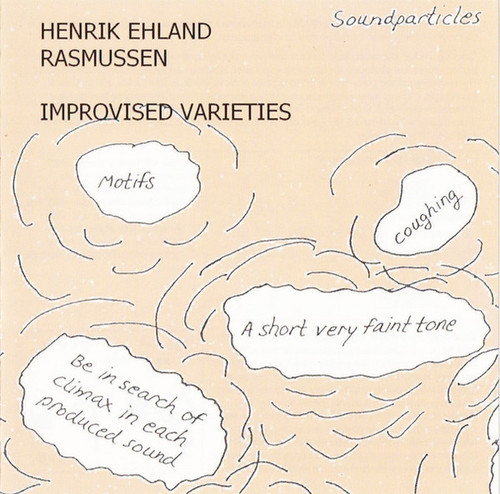
Improvised Varieties
*In process of stocking. 2022 stock* "This CD features music from concerts with Intuitive Music Group (founded 1990) and from some of its members' touring activities in Poland and Russia. It centers around composer and pianist Henrik Ehland Rasmussen. There are three long solo pieces, including one based on a formula given by his countryman Niels Viggo Bentzon, in which countless varied statings of the formula produces an astounding number of ever-developing pianistic phenomena. The other pieces…
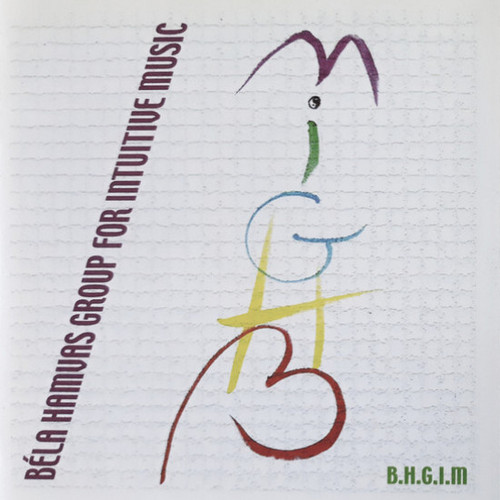
Béla Hamvas Group For Intuitive Music
*In process of stocking. 2022 stock* "This is pure intuitive music, full of improvisation and spontaneity. here we have amazing musicians that interact between them in an amazing way creating pasages that despite using heavily experimentation and improvisation are really coherent and also they explore without falling into chaotic musical pieces. I am really amazed by this musicians that are constantly exploring new sounds with their instruments yet retaining a "group spirit" that allows them to …
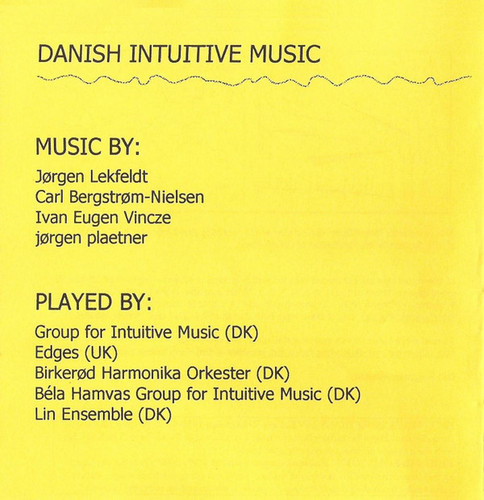
Danish Intuitive Music
*In process of stocking. 2022 stock* "The Group for Intuitive Music originated in 1974 around the Copenhagen University Institute of Music with Jørgen Lekfeldt and his piano teacher, Elisabeth Klein, as the founder members. Carl Bergstrøm-Nielsen, Anders Keiding and Niels Rosing-Schow, also students at the same place, joined the group. Pieces from Stockhausen's verbally notated collections From the Seven Days and For Times to Come constituted the group's first repertoire. Soon, however, it devel…
Irida Records: Hybrid Musics from Texas and Beyond, 1979–1986
An incredible set of vinyl reissues explores the unfolding sonic fiction of Texan composer Jerry Hunt and others affiliated with his Irida label.
Somatic Refrain
Somatic Refrain is a collection by Allison Cameron for varied chamber forces and ensemble, performed by Apartment House and the Allison Cameron Band. Her music combines delicate sound textures, unpredictable motifs, and hints of folk and experimental methods, rewarding attentive listeners with gentle surprises and new perspectives on instrumental color.

An Album
An Album by Tim Parkinson and Apartment House includes five works covering two decades of the composer’s creative evolution. From uncoordinated solo and ensemble pieces to re-imagined septets and violin-piano duos, the music is marked by matter-of-fact presentation, rhythmic independence, and a celebration of the mundane as fertile compositional ground.
Hymnkus Thoreau Drawings Two
Hymnkus Thoreau Drawings Two features three rarely encountered works by John Cage, interpreted by Apartment House. The album brings together the sparse, spatial interplay of “Two”, the poised transformations of “Thoreau Drawings”, and the hypnotic, layered repetitions of “Hymnkus” in performances marked by clarity, restraint, and ensemble sensitivity.
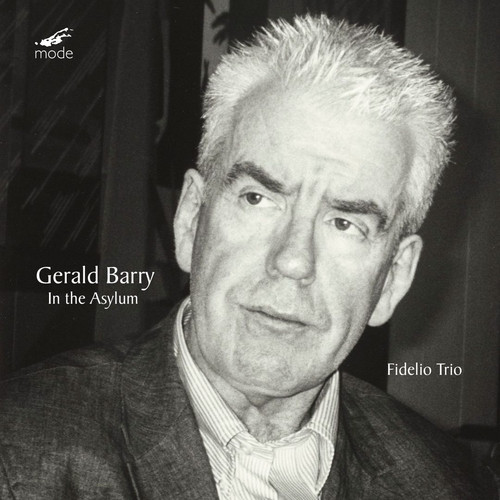
In the Asylum
Chamber works by Irish composer Gerald Barry for solo piano, violin and piano, piano trio and piano quartet, played by the Fidelio Trio with Rose Redgrave and the composer. All but In the Asylum are first recordings.
Block Gifts
*300 copies limited edition. In process of stocking* Block Gifts is a collection of three works for organs composed by James Rushford between 2015 and 2018. Using harmonium, portative organ and electric organ, each piece is linked by Rushford’s idiosyncratic combination of strict intervallic systems in different tunings (Werckmeister, quarter-tone, equal temperament), and haptically-informed rhythmic and expressive freedom. Creaks, stutters and sweeping fingers on keys become instrumental sounds…
Trio IX / Exercises
The American composer Christian Wolff (b. 1934) is the last living representative of the New York School (Rauschenberg, Rothko, etc.). Wolff was not even an adult when he studied with Grete Sultan and John Cage. Wolff’s music was much more politically motivated than that of Feldman and Cage, which is evident on this new Wergo album by Trio Accanto. The album features first recordings made in close collaboration with Wolff in the studios of Deutschlandfunk Cologne/Germany. Wolff's great “Trio IX …
...Of Late
Astral Spirits presents ...of Late by Jessica Pavone String Ensemble.
Jessica Pavone - composer / viola; voice on track 3Aimée Niemann - violin; voice on track 3Abby Swidler - violin on tracks 1,3,4; viola on tracks 2&5; voice on track 3
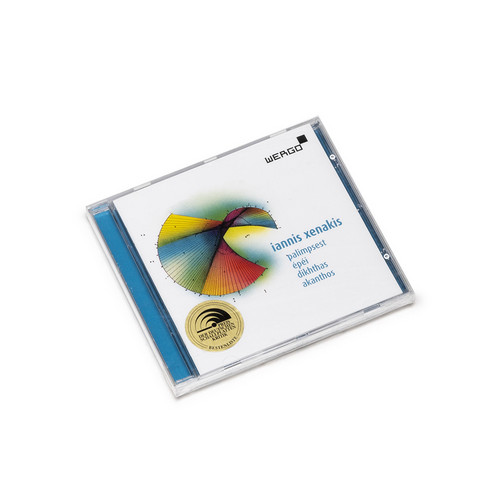
Palimpsest | Épéi | Dikhthas | Akanthos
*2022 stock* 'This collection of ensemble works, six altogether, ranges across the last two decades of Iannis Xenakis's life. It includes the last two pieces he composed, Zythos, for trombone and six marimbas, and O-Mega, for percussion and ensemble, both written in 1997, four years before his death. They are striking, small-scale examples of the bareness and drastic compression of his late style, but the finest music here is a bit earlier. In Échange, from 1989, a bass clarinet painstakingly un…
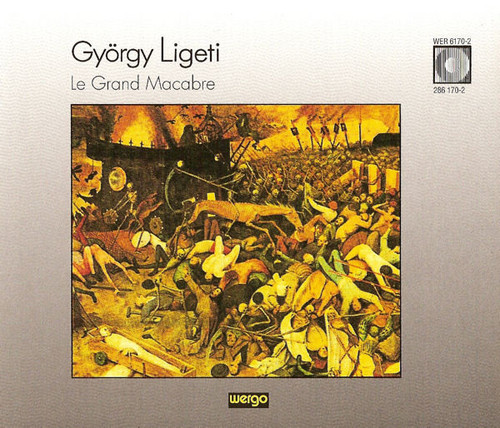
Le Grand Macabre
György Ligeti's only opera, Le Grand Macabre, is an entertaining, taut piece of musical theatre that sits somewhere between parody and ominous seriousness, between clowning and wisdom. Based on Michel de Ghelderode's play and set in the imaginary land of Breughelland, it follows Nekrotzar, alias the Grand Macabre, who has not only ambitions to suck blood but apocalyptic visions: he wants to bring about the end of the world personally, and fails.
Ligeti himself said its bizarre, exaggerated music…
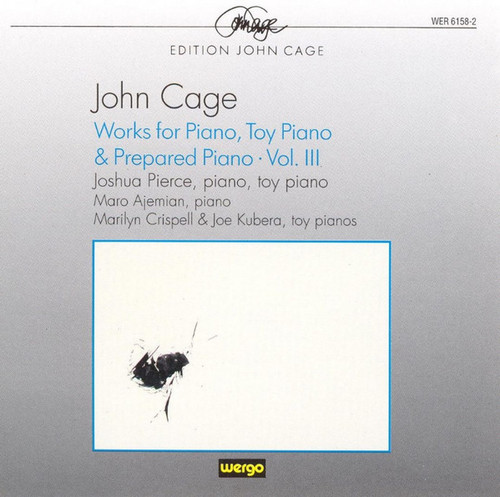
Works For Piano, Toy Piano & Prepared Piano · Vol. III
*2022 stock* It may come as a surprise but one of the leading creators of keyboard music in the twentieth century is a composer by the name of John Cage. Cage’s reputation is so deeply associated with the avantgarde, with chance music, graphic notation, performance art, technology and Zen Buddhism that is early, conventionally-notated music for percussion ensemble and keyboards is sometimes neglected. Or was until recently. In the last few years – with the advent of performances and recordings l…
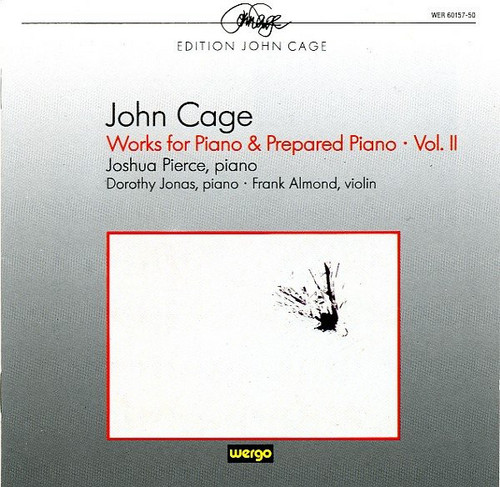
Works For Piano & Prepared Piano · Vol. II (1944-1958)
*2022 stock* This recording deals with works composed between 1944 and 1958, including several of Cage's lovely and masterful prepared piano pieces, which will come as a major surprise to those familiar only with his chance compositions. Joshua Pierce is the principal pianist (assisted by Dorothy Jonas on the Three Dances, written for two pianos) and attacks the pieces with a nice balance of delicacy and aggression, although compared to the earlier Angel recording of the abovementioned Three Dan…
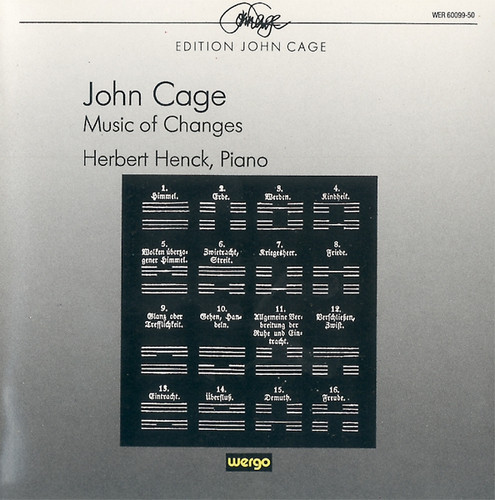
Music Of Changes
*2022 stock* It's over 70 years since John Cage wrote his pivotal Music of Changes, and it's beginning to show its age. It feels very much of its time, with its uncompromising adherence to the 64 hexagrams of I-Ching, the Chinese book of changes, determining the direction of the piece and its use of sudden, percussive attacks on the strings or the body of the instrument. But for all that there is no denying the extreme stamina and concentration required of the performer, and here Herbert Henck e…
I Like To Think Of Harriet Tubman
Chamber works by Christian Wolff from 1950 to 1987, mostly first recordings, including the Serenade written at sixteen, the Harriet Tubman setting for voice and trio, and For Morty, played by The Barton Workshop under James Fulkerson.
Tempi Agitati
Katharina Rosenberger's Tempi Agitati, a vocal work for Neue Vocalsolisten Stuttgart that sets Petrarch's texts alongside madrigals by Willaert and Rore, using extended vocal techniques. Complete Petrarch texts are included.